


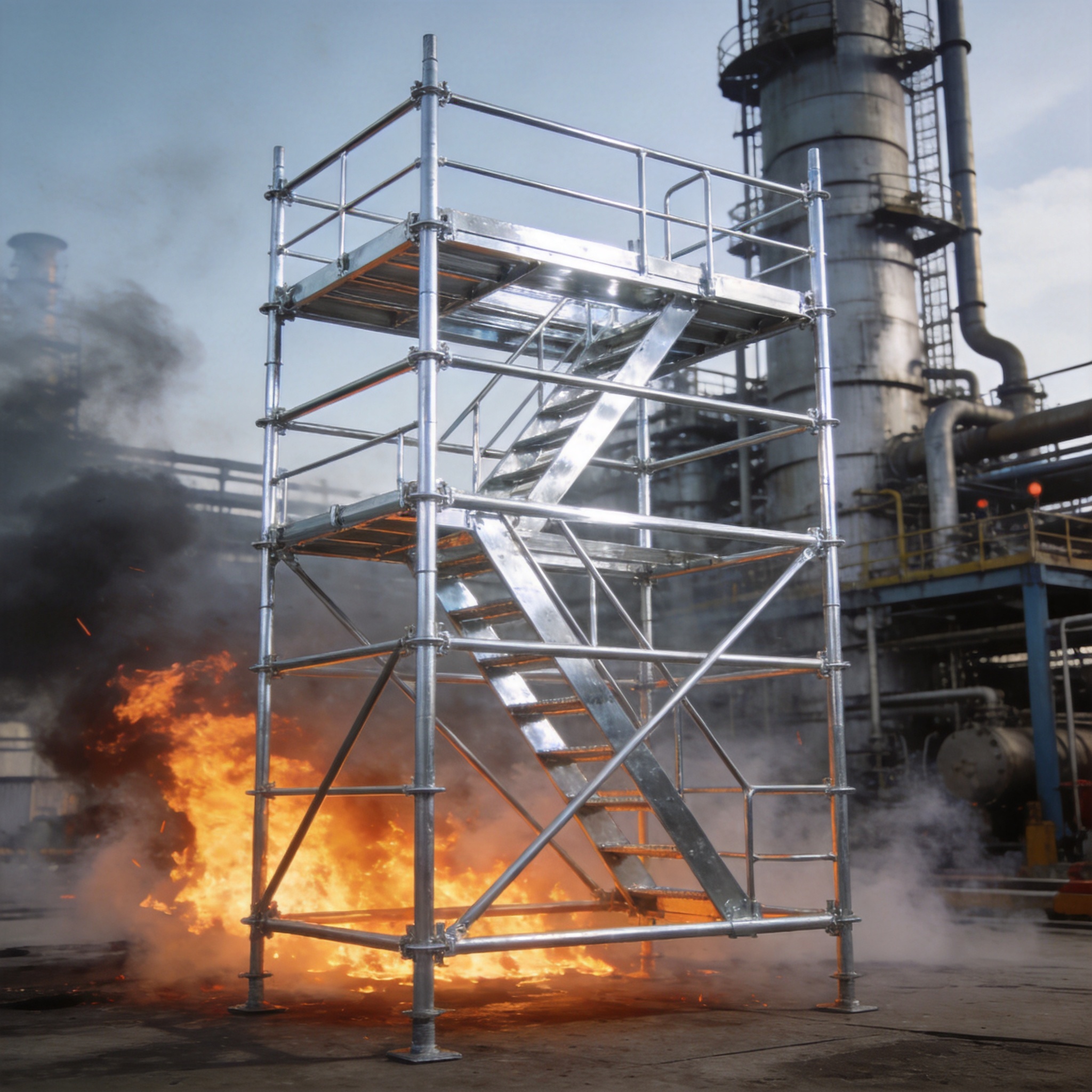

1. What are aluminum planks used for in construction?
Aluminum planks are commonly used as working platforms in scaffolding systems, walkways, staging platforms, and temporary access structures on construction sites.
2. What are the advantages of aluminum planks compared to wooden or steel planks?
- Lightweight and easy to handle
- Corrosion and rust-resistant
- High strength-to-weight ratio
- Long service life
- Easy transportation and installation
3. Are aluminum planks safe for scaffolding applications?
Yes, high-quality aluminum planks are designed with anti-slip surfaces, reinforced structures, and secure locking hooks to provide safe working platforms when used correctly.
4. What industries commonly use aluminum planks?
They are widely used in construction, shipbuilding, industrial maintenance, warehouse operations, and infrastructure projects.
5. What factors should be considered when selecting aluminum planks?
Important factors include load capacity, plank length and width, anti-slip design, compatibility with scaffolding systems, and compliance with safety standards.

When it comes to building materials, few things strike a balance between strength and versatility quite like aluminum planks. This unassuming yet indispensable component has quietly revolutionized the construction industry, making its mark from towering skyscrapers to ambitious home projects. But what makes aluminum plank such a game-changer? The answer lies in its unique blend of robustness and adaptability, which allows architects and builders to push the boundaries of design and functionality, creating structures that are not only more durable but also aesthetically pleasing.
Consider this: in an era where sustainability and efficiency drive innovation, the aluminum planks emerge as an unsung hero. Its lightweight nature reduces transportation costs and energy consumption during installation, while its corrosion-resistant properties promise longevity even in the harshest environments. As we dive deeper into the majesty of aluminum planks, you’ll discover why this material is rapidly becoming a cornerstone in modern construction, paving the way for a future where efficiency meets ingenuity.
The Evolution of Aluminum Planks in Construction
The story of aluminum plank dates back to the early 20th century, when aluminum became commercially viable due to advances in extraction and processing methods. Initially, applications were limited to aircraft and automotive industries, prized for aluminum’s excellent strength-to-weight ratio. However, as milling and extrusion techniques evolved, manufacturers realized that aluminum plank could also serve as a revolutionary building material. By the mid-century, pioneering architects began experimenting with aluminum planks in façade systems and interior elements, leveraging its corrosion resistance and sleek appearance.
Over the decades, the aluminum plank has undergone continuous innovation. Modern surface treatments, such as anodizing and powder coating, have enhanced its durability and design palette. This evolution has opened doors for its use in high-rise cladding, curtain walls, roofing, and decking solutions. Today’s aluminum plank offerings incorporate composite cores, sound-dampening features, and thermal breaks to meet stringent building codes and energy efficiency goals. As a result, this once-niche product has become mainstream, influencing how we conceive and construct our built environment.
Strength and Durability: Advantages of Using Aluminum Planks
One of the foremost reasons builders turn to aluminum plank is its exceptional strength-to-weight ratio. Compared to steel or wood, aluminum offers similar structural resilience at a fraction of the weight. This translates to lighter supporting frameworks, reduced foundation loads, and easier handling on job sites. The result is shorter installation times and minimized labor costs without compromising safety or performance.
Durability is another hallmark of aluminum planks. Unlike wood, which can warp, rot, or succumb to pests, aluminum remains stable under fluctuating temperatures and humidity levels. Thanks to its natural oxide layer, aluminum resists corrosion even in salt-laden coastal environments. When finished with protective coatings, aluminum plank can withstand harsh UV rays, acid rain, and industrial pollutants, ensuring facades and decking maintain their integrity and appearance for decades.
Moreover, aluminum planks’ non-combustible nature enhances building safety. In fire-prone regions, using aluminum reduces the risk of structural damage and spread of flames, offering crucial extra minutes for evacuation and firefighting efforts. All these factors combine to make aluminum plank a top choice for projects where longevity, safety, and performance are non-negotiable.
Sustainability Matters: Environmental Benefits of Aluminum Plank

Aluminum plank stands out as a sustainable building material, largely due to its recyclability. Nearly 75% of all aluminum ever produced is still in use today, underscoring its circular lifecycle. At the end of a building’s life, aluminum planks can be reclaimed and reprocessed with only a fraction of the energy required for primary aluminum production, significantly reducing carbon footprints.
Another green advantage is the material’s thermal efficiency. When engineered with integrated thermal breaks or paired with insulating backings, aluminum plank enhances a building’s energy performance. By reducing heat transfer, these systems lower heating and cooling demands, translating to decreased utility bills and greenhouse gas emissions over the structure’s lifespan.
Transportation efficiency also plays a role in aluminum plank’s eco-credentials. Its lightweight profile reduces shipment weights, cutting fuel consumption and logistical costs. Additionally, many manufacturers now offer responsibly sourced aluminum produced with renewable energy, further minimizing environmental impacts. Collectively, these attributes position aluminum plank as a forward-thinking choice for sustainable construction and green building certifications.
Design Freedom: How Aluminum Plank Enhances Architectural Possibilities
One of the greatest appeals of aluminum plank is its versatility in form and finish. Architects can specify panels in virtually any shape or size, from sleek linear boards to complex curved profiles. The extrusion process allows for intricate cross-sections and channels, enabling custom façade solutions that integrate solar shading, lighting reveals, or rain-screen cavities.
When it comes to aesthetics, the finish options are virtually limitless. Anodized aluminum plank provides a durable metallic sheen that complements modern, industrial designs, while powder coatings deliver rich, uniform colors that resist fading and chalking. Digital printing on aluminum planks can even reproduce high-resolution patterns or imagery, allowing designers to imprint logos, textures, or artwork directly onto building exteriors.
Beyond appearances, aluminum plank fosters innovative building envelopes. Perforated panels facilitate natural ventilation and daylighting strategies, while open-joint systems create dynamic visual effects and airflow. For interior applications, lightweight aluminum plank can be used for suspended ceilings, wall cladding, and decorative partitions that combine form and function seamlessly. This design freedom empowers architects to achieve visionary concepts without sacrificing durability or performance.
Maintenance Made Easy: The Longevity of Aluminum Plank Structures
Routine upkeep of building exteriors can be labor-intensive and costly, but aluminum planks simplify maintenance in multiple ways. Thanks to its smooth, non-porous surfaces, dirt and pollutants wash away easily during rain events. For stubborn stains or graffiti, mild detergents and water often suffice, eliminating the need for harsh chemicals that can damage other materials.
Aluminum’s corrosion resistance means there’s no need for periodic sealing, staining, or painting as required by wood or steel components. Should a panel become damaged, individual sections can be quickly replaced without dismantling large swaths of the façade. This modularity reduces downtime and labor expenses, keeping buildings looking pristine with minimal intervention.
Additionally, the aluminum plank’s longevity translates to fewer lifecycle replacements. When correctly specified and installed, these systems can last 50 years or more, far outpacing many alternative materials. The result is a favorable total cost of ownership, as owners avoid recurring renovation cycles and enjoy sustained aesthetic appeal and structural integrity.
Embracing the Future: Trends and Forecasts in Aluminum Plank Construction
As the construction industry pursues greater sustainability and digital integration, aluminum planks continue to evolve. Emerging trends include smart façades embedded with photovoltaic cells, where solar-harvesting aluminum plank generates renewable energy while shielding interiors from glare. Innovations in 3D printing and robotic assembly are streamlining customization, enabling on-demand fabrication of intricate plank geometries with unprecedented precision.
Looking ahead, predictive analytics and building information modeling (BIM) are enhancing material optimization. By simulating performance under varying conditions, designers can fine-tune aluminum plank specifications to balance thermal performance, structural requirements, and aesthetic aspirations. Advances in coating technologies—such as self-healing or self-cleaning finishes—promise to further reduce maintenance demands and extend service life.
In sum, aluminum planks are poised to remain a foundational element in construction’s future. Its combination of strength, lightweight form, environmental benefits, and design flexibility aligns perfectly with the industry’s drive toward smart, sustainable, and resilient buildings. As these trends converge, the majestic rigidity of aluminum planks will continue shaping skylines and redefining what’s possible in the built environment.
