


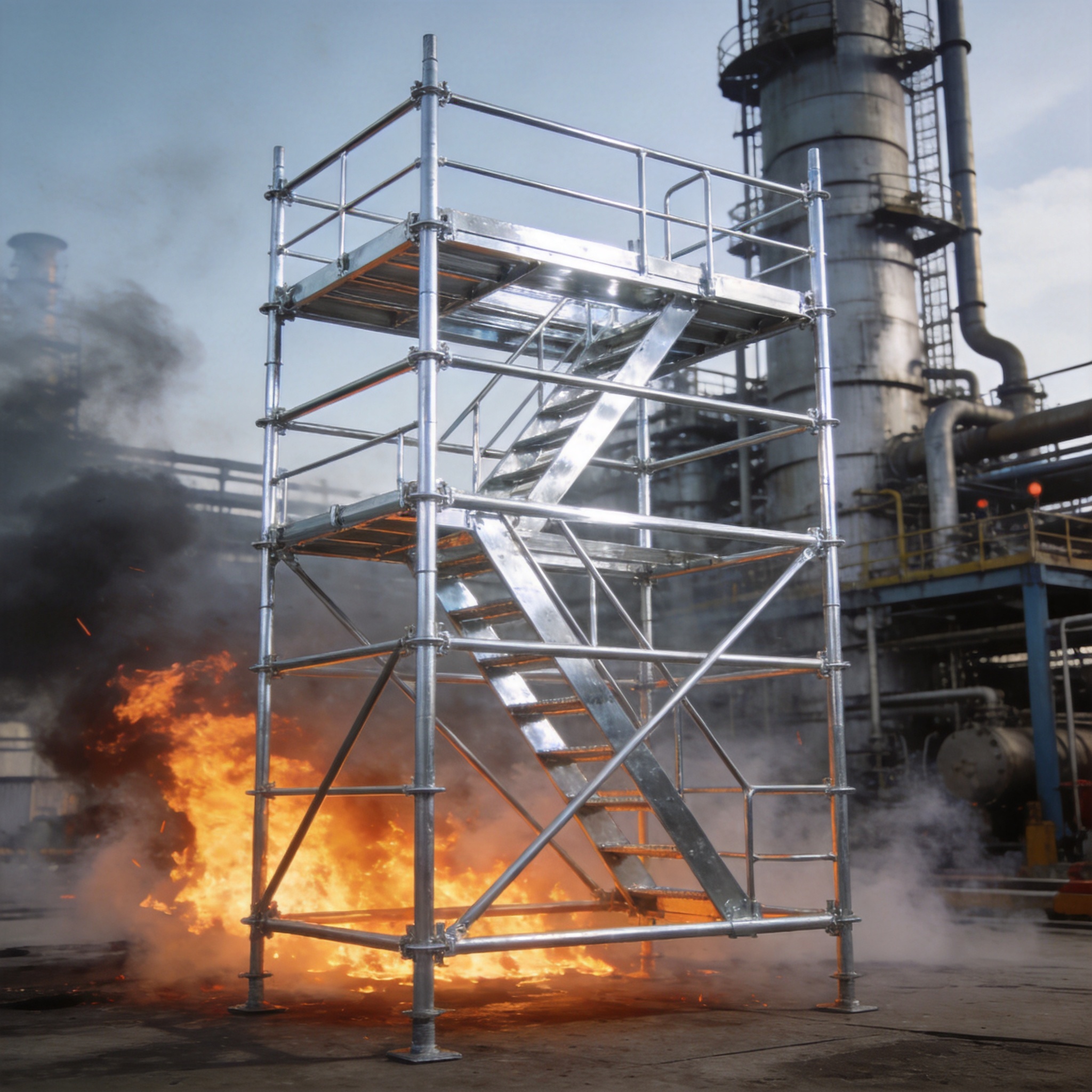


As you gaze upon the majestic skyline of any bustling city, it’s easy to marvel at the towering structures that pierce the sky with their architectural brilliance. Yet, hidden behind every gleaming skyscraper and intricate façade lies an unsung hero that often goes unnoticed — scaffolding for construction. This crucial component serves as the backbone of modern architecture, providing the essential support and access needed for workers to bring ambitious designs to life safely and efficiently. Without it, those daring visions of steel and glass would remain just that — visions.
Imagine attempting to craft these urban giants without the steadfast assistance of scaffolding. It’s akin to trying to paint a colossal masterpiece without ever stepping back to see it in its full glory. These robust frameworks not only ensure the safety of construction crews but also empower architects and builders to execute even the most daring designs with precision and confidence. As we delve into the world of scaffolding for construction, we uncover the pivotal role it plays in shaping the skylines that inspire us daily, turning blueprints into breathtaking reality.

Evolution of Scaffolding: From Ancient Times to Modern Innovations
The concept of providing temporary platforms and supports to reach elevated areas dates back thousands of years. Ancient civilizations—from the Egyptians erecting grand pyramids to the Greeks constructing monumental temples—relied on rudimentary forms of scaffolding crafted from timber poles, rope lashings, and simple planks. These early systems, though basic, showcased the ingenuity of builders who understood the need for stable access to heights. In medieval Europe, timber scaffolds evolved into more complex wooden frameworks for cathedrals, where master masons climbed precarious structures to carve stone and install stained-glass windows.
Fast forward to the Industrial Revolution, and metal began to replace wood. Wrought iron and later steel tubes gave rise to the first tube-and-coupler scaffolding systems in the 19th century. This transition marked a seismic shift in durability, load capacity, and safety. By the mid-20th century, standardized prefabricated modular scaffolding components emerged, streamlining erection and dismantling processes. Today’s innovations in scaffolding for construction extend beyond materials; we’ve embraced lightweight aluminum alloys, quick-lock couplers, and integrated safety platforms. Cutting-edge technologies such as Building Information Modeling (BIM) and digital twins now facilitate precise planning, clash detection, and optimized layouts. As robotics and automation continue to advance, we can anticipate scaffolding systems that self-level, self-erect, and communicate in real time—ushering in a new era of efficiency and safety in construction.
Types of Scaffolding Systems Used in Construction
Scaffolding for construction comes in a diverse array of systems designed to meet specific project requirements, site constraints, and safety standards. The most ubiquitous type is the tube-and-coupler system, characterized by steel or aluminum tubes connected with versatile couplers. This approach offers unmatched flexibility for irregular or complex structures. Another widely used variant is the frame scaffold, featuring prefabricated welded frames and cross braces that speed up assembly and dismantling, making it ideal for residential and light commercial projects.
Suspended scaffolding, such as swing stages and bosun’s chairs, provides a mobile working platform hanging from roof anchors—perfect for façade maintenance and painting. Cantilever or needle scaffolding projects support loads via beams anchored inside a building when ground conditions prevent traditional base plates. In recent years, rolling or mobile scaffolds equipped with lockable casters have gained popularity, offering portability without compromising worker safety. System scaffolds like the multidirectional Ringlock and Kwikstage further enhance efficiency with standardized nodes and automatic locking mechanisms. Each type of scaffolding for construction is selected based on load capacity, height requirements, terrain, and the nature of the work, ensuring optimal performance and safety on every site.
Importance of Scaffolding Safety Regulations and Standards
Ensuring worker safety and structural integrity on construction sites demands adherence to stringent regulations and standards worldwide. Organizations such as OSHA in the United States, the British Standards Institution (BSI) in the UK, and the European Committee for Standardization (CEN) have established comprehensive guidelines governing the design, erection, inspection, and maintenance of scaffolding for construction. These regulations outline criteria for load capacities, platform dimensions, guardrails, access ladders, and tie-in requirements to prevent collapses and falls—one of the leading causes of on-site injuries.
Compliance begins with proper planning: a qualified engineer must assess ground conditions, calculate wind loads, and specify materials and connections suitable for the anticipated stresses. Erection must be supervised by competent personnel trained in best practices and hazard recognition. Routine inspections—daily checks and periodic in-depth reviews—identify wear, loose components, or environmental damage early, averting potential failures. Workers must receive scaffold-specific training, covering correct assembly, safe climbing techniques, use of personal protective equipment (PPE), and emergency procedures. By rigorously following these scaffold safety standards, project managers protect their workforce, minimize downtime from accidents, and uphold legal and ethical responsibilities to foster a culture of safety on every construction site.
The Role of Scaffolding in Enhancing Construction Efficiency
Scaffolding for construction is far more than a mere support structure—it’s a critical enabler of productivity and streamlined workflows. By offering safe, stable, and adaptable working platforms, scaffolds allow multiple trade crews—masonry, painting, electrical, and HVAC—to work simultaneously at various elevations. This multi-tiered approach reduces scheduling bottlenecks, accelerates project timelines, and avoids costly delays. Prefabricated modular systems, such as ringlocking and cuplock scaffolds, can be pre-assembled and delivered just-in-time, slashing on-site labor hours and enabling rapid reconfiguration as the building shape evolves.
Efficient access also translates to higher-quality workmanship. When artisans can reach every nook and cranny comfortably, they take greater care with finishes, alignment, and precision tasks. Moreover, integrated hoists and material lifts built into scaffold structures minimize manual handling, reducing fatigue and speeding up the transfer of bricks, mortar, tools, and equipment. Advanced planning software paired with BIM enables digital scaffold modeling, optimizing component usage and logistics. This data-driven approach cuts waste, controls costs, and synchronizes scaffold installation with other critical-path activities, making scaffolding for construction a linchpin in achieving fast, safe, and cost-effective project delivery.
Sustainable Practices in Scaffolding: Reducing the Environmental Impact
As the construction industry embraces greener practices, scaffolding suppliers and contractors are integrating sustainability into every stage of the scaffold life cycle. Reusable modular components made from high-strength aluminum alloys or sustainably sourced steels form the backbone of circular scaffolding systems. After a project concludes, these components are collected, inspected, refurbished, and reissued, dramatically reducing material waste and raw resource consumption. Many firms track component histories via barcodes or RFID tags to ensure timely maintenance and extend product longevity.
Beyond material reuse, innovations such as powder-coating finishes free from volatile organic compounds (VOCs) minimize air pollution. Some companies offer scaffold rental models that include comprehensive maintenance and end-of-life recycling, shifting environmental responsibility to specialists and encouraging widespread reuse. Digital planning tools reduce over-ordering by accurately calculating required parts down to the last bracket and board. Even transportation emissions are addressed through consolidated logistical routes and lightweight design—all contributing to a lower carbon footprint. By adopting these sustainable practices, scaffolding for construction aligns with broader green building initiatives and helps clients earn credits toward LEED, BREEAM, and other environmental certifications, proving that safety, efficiency, and eco-friendliness can go hand in hand.
Conclusion: Recognizing the Unsung Heroes of the Construction Industry
Scaffolding for construction may operate behind the scenes, but its impact resonates across every phase of a building’s journey. From ancient timber towers to today’s high-tech modular systems, scaffolds have evolved to become safe, efficient, and sustainable platforms that underpin architectural marvels worldwide.
As we celebrate cutting-edge designs and soaring skylines, let’s also acknowledge the engineering and craftsmanship that scaffold systems represent. These adaptable frameworks stand as true unsung heroes—supporting, elevating, and protecting the people who shape our urban landscapes.
