


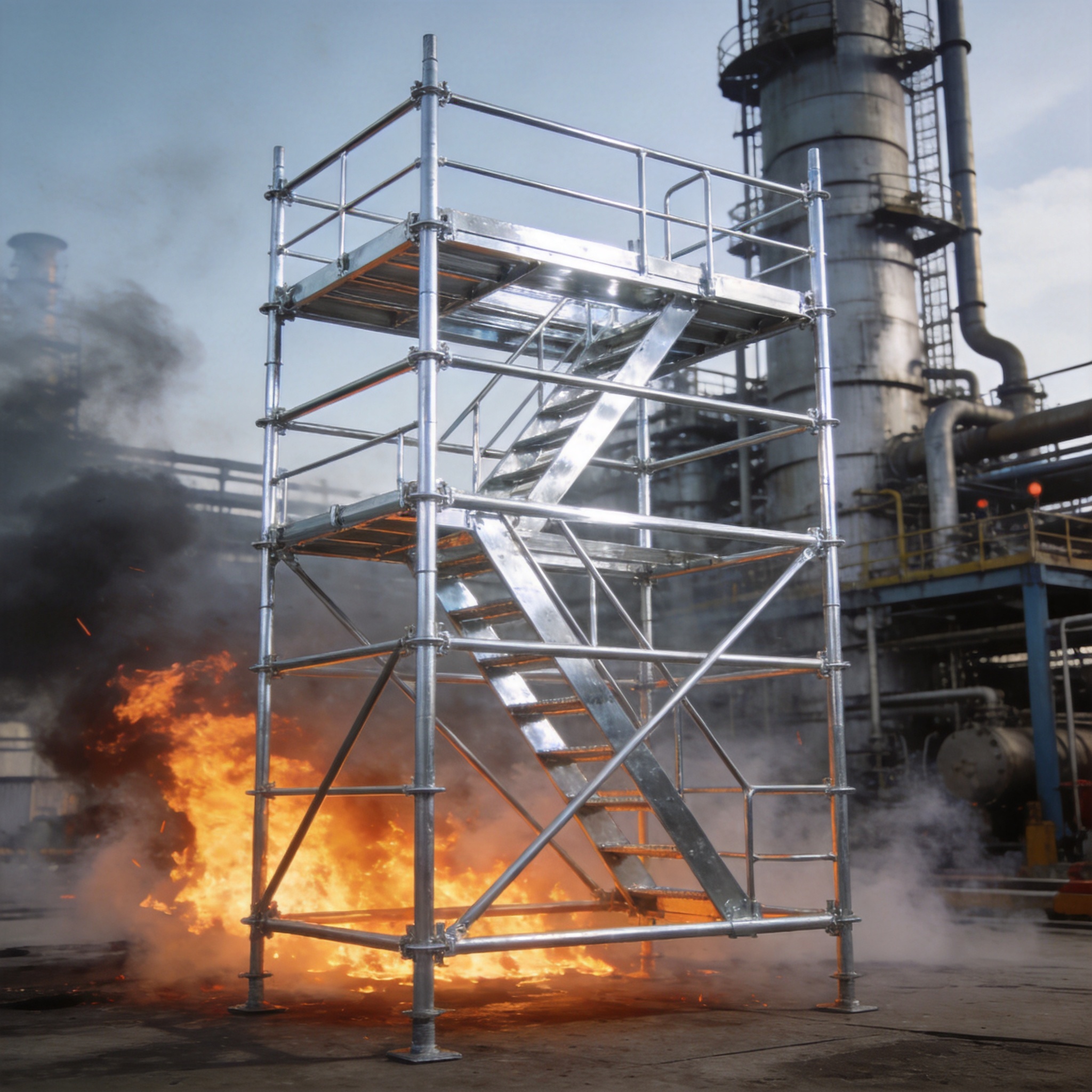

Imagine a bustling construction site where towering structures are being erected, each day bringing new challenges and triumphs. Amidst the orchestrated chaos, a silent hero emerges—one that plays an indispensable role in ensuring both safety and stability. The outrigger in scaffolding is this unsung champion, crucial for providing the much-needed balance to prevent accidents and mishaps that could otherwise have catastrophic consequences.
Undeniably, the complexity of modern construction demands innovative solutions, and understanding the role of outriggers is key to navigating these challenges. These stabilizing arms extend far beyond their physical reach, symbolizing a commitment to the well-being of every individual on site. By delving into how outriggers enhance scaffolding systems, this post will illuminate their importance, transforming your perspective on construction safety. So, whether you’re a seasoned professional or a curious onlooker, join us as we explore how these crucial components redefine strength and security in the world of construction.

The Fundamentals of Outriggers in Scaffolding
The foundation of safe scaffolding relies heavily on understanding the fundamentals of support systems like outriggers. An outrigger in scaffolding is an extendable arm or bracket designed to widen the base footprint, acting as a stabilizing force against lateral movement. Built from robust materials such as steel or aluminum, these components are engineered to withstand high stress without deforming, ensuring that the structural integrity of a scaffold remains uncompromised.
Outriggers typically consist of a telescoping beam that can be adjusted to various lengths, a locking mechanism for secure placement, and a base plate or wheel attachment. The telescopic nature allows for customization to accommodate uneven ground and different working heights. Locking pins and clamps ensure that once the desired extension is set, it remains fixed under load. Base plates or swiveling wheels distribute weight evenly, preventing sinking or tilting on softer surfaces.
Integrating outriggers into a scaffolding system requires precise measurement and alignment. The distance between outriggers, known as the outrigger footprint, directly correlates with the level of stability achieved. A wider footprint reduces the risk of tipping by lowering the center of gravity and counteracting forces such as wind or uneven loading. Proper placement also involves ensuring that each outrigger rests on a firm, level surface—often necessitating the use of adjustable screw jacks or spreader plates for fine-tuning on challenging terrains.
Modern scaffolding systems often feature modular outriggers that can be swiftly assembled or removed, adapting to changing project requirements. Their compatibility with various scaffold types—such as frame, tube-and-clamp, or cuplock systems—ensures that no matter the configuration, the addition of outriggers enhances overall safety. Training installers to recognize the correct attachment points and torque specifications is essential for reliable performance.
Importance of Outriggers for Stability
Ensuring stability on any construction site is non-negotiable, and this is where the role of the outrigger in scaffolding shines brightest. By effectively broadening the scaffold’s base, outriggers mitigate the risk of tipping caused by uneven loads or gusty winds. This extended support is especially vital when working at increased heights, as small shifts at ground level can translate into significant sways at the work platform.
In practice, an outrigger in scaffolding reduces pressure points on the structure by distributing weight across a larger area. This distribution is crucial when heavy equipment or concentrated loads—such as masonry materials—are placed on the scaffold. Without outriggers, the concentrated weight could lead to differential settlement of the legs, causing misalignment and potential structural collapse.
Beyond physical stability, outriggers contribute to the psychological well-being of workers. Knowing they have a secure platform enhances confidence, reducing errors caused by hesitation or fear. Properly installed outriggers can reduce downtime due to inspections and corrective measures, streamlining workflow and ensuring that deadlines are met without compromising safety. Consequently, the marginal investment in outrigger components pays dividends in productivity and site morale.
Moreover, advancements in outrigger design—like quick-adjust mechanisms and lightweight alloys—make them easier to deploy without sacrificing strength. This ease of use encourages regular inspections and timely adjustments, which are critical for maintaining scaffold stability over the duration of a project. Ultimately, integrating outriggers positions them not just as optional extras but as indispensable safety features on modern jobsites.
Regulations and Standards Governing Outrigger Usage
Regulatory bodies across the globe recognize the importance of an outrigger in scaffolding and have established standards to govern their usage. In the United States, the Occupational Safety and Health Administration (OSHA) mandates that scaffolds possess a stable base capable of supporting four times the maximum intended load. Outriggers, when correctly installed, help scaffolding systems comply with these load-bearing requirements by expanding support points and preventing base failures.
In Europe, the EN 12810 and EN 12811 standards outline criteria for the design, performance, and testing of façades and scaffolding systems, explicitly covering the geometry and strength of outriggers. These standards require manufacturers to perform rigorous load tests under dynamic and static conditions, certifying that outriggers will perform reliably under typical site stresses. Regular inspections and maintenance logs are also mandated, ensuring that any wear or damage is identified before it compromises structural safety.
Local jurisdictions may impose additional protocols, such as minimum distances from adjacent structures, mandatory guardrails on outriggers, and guidelines for ground preparation before installation. Safety managers must consult both national regulations and site-specific safety plans to ensure full compliance. Failure to adhere to these rules can result in hefty fines, work stoppages, and, most importantly, elevated risks of accidents that could have been prevented through proper outrigger implementation.
Moreover, industry associations like the Scaffold & Access Industry Association (SAIA) and the International Powered Access Federation (IPAF) provide best practice guidelines, offering training courses on outrigger setup and inspection. Adhering to these consensus-driven standards not only aligns with legal requirements but also embeds a safety culture, empowering every worker to trust the stability provided by a well-designed outrigger system.
Innovations in Outrigger Technology
The field of outriggers in scaffolding technology has seen substantial innovations in recent years, driven by the dual demands for safety and efficiency. One of the most notable advancements is the use of high-strength, lightweight alloys—such as aluminum-scandium blends—that reduce the weight of outriggers by up to 30% without compromising load capacity. These materials not only ease the manual handling process but also minimize the overall footprint weight, which is crucial for rooftop or delicate surface installations.
Another transformative development is the integration of quick-connect systems that allow workers to deploy and retract outriggers in seconds. Traditional pin-and-hole mechanisms are being replaced by ergonomic levers and cam-locks, eliminating tool dependency and reducing setup errors. Many manufacturers now incorporate color-coded indicators on locking mechanisms, providing immediate visual confirmation of proper engagement, which is vital during routine safety inspections.
Perhaps most exciting is the advent of digital outrigger monitoring systems. Embedded sensors can measure tension, tilt angles, and load distribution in real time, feeding data to mobile apps or site-wide dashboards. This Internet of Things (IoT) approach enables predictive maintenance—alerts are triggered when thresholds are exceeded, preventing overloading or misalignment before they pose a hazard. Some platforms even use augmented reality to guide installers through the optimal placement of outriggers on uneven ground, streamlining training and reducing human error.
Looking ahead, research is focusing on self-leveling outriggers that automatically adjust to ground irregularities and deploy stabilizing pads at optimal angles. Combined with machine-learning algorithms, these smart systems promise to further elevate safety standards while reducing setup time, heralding a new era in scaffold stabilization technology.
Conclusion: The Significance of Outriggers in Ensuring Safety and Stability
Outriggers are far more than accessory parts; they are vital components that ensure the safety and stability of scaffolding systems across all construction projects. By expanding load-bearing capacity, enhancing worker confidence, and complying with stringent regulations, an outrigger in scaffolding truly becomes the backbone of secure elevated work platforms.
As technological innovation continues to refine their design and functionality, the role of outriggers will only grow in significance. Embracing both established best practices and emerging smart solutions makes every job site not just more efficient, but fundamentally safer for everyone involved.
