


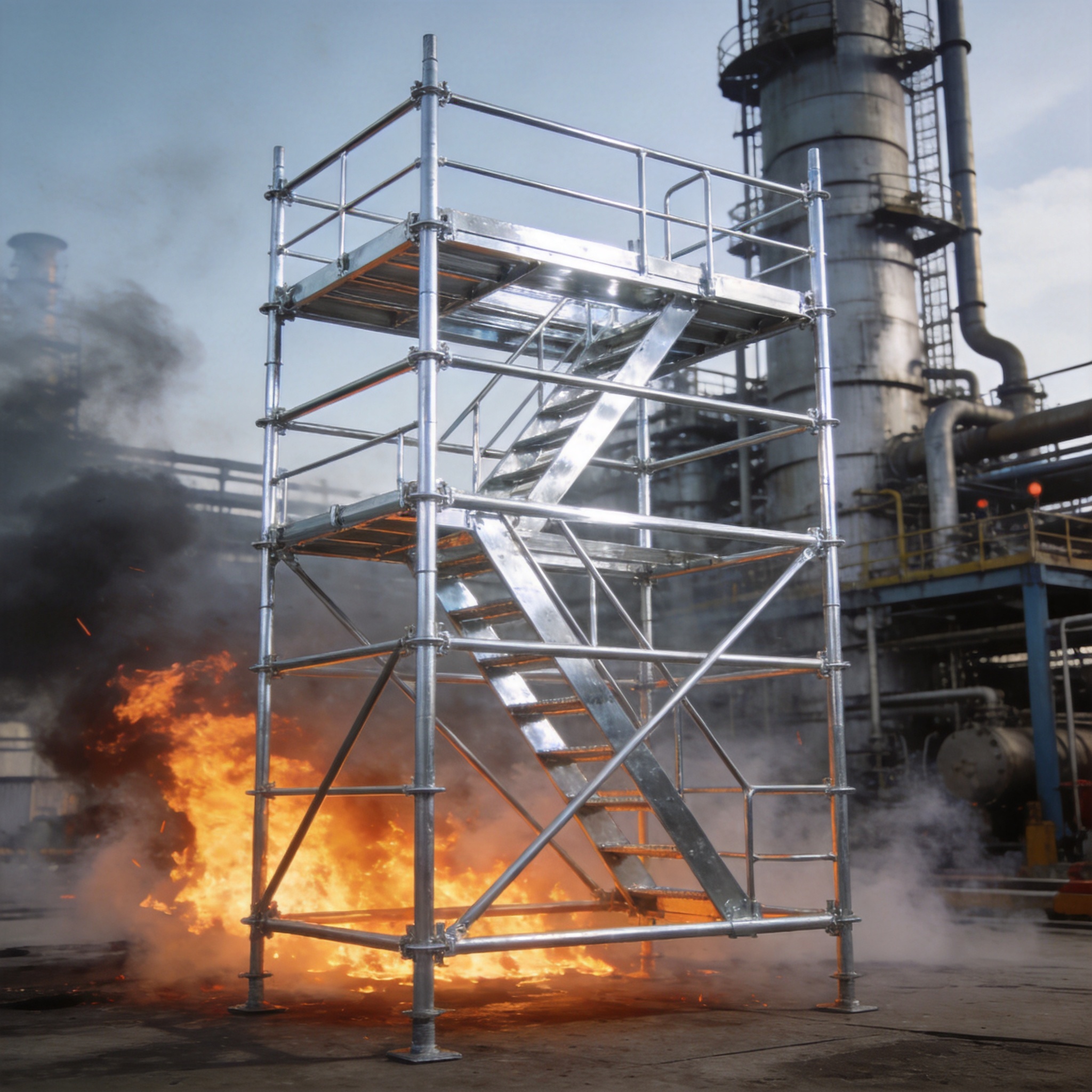

In an era where the skyline of our cities is constantly evolving and reaching for the clouds, the demand for innovative construction solutions has never been more urgent. Enter aluminum scaffolding—an unsung hero quietly transforming the way we build and maintain these towering marvels. Unlike its heavier, traditional counterparts, aluminum scaffolding offers a lightweight yet robust alternative that is as versatile as it is durable. This modern-day construction ally not only simplifies the setup process but also ensures worker safety, thereby reshaping the industry’s approach to building.
But what makes aluminum scaffolding truly revolutionary? Beyond its obvious physical properties, its impact extends to efficiency and cost-effectiveness, making it a go-to choice for construction teams worldwide. A surprising 40% reduction in assembly time has been reported in projects that utilize this type of scaffolding, significantly accelerating project timelines without compromising on quality. As we delve deeper into the world of aluminum scaffolding, prepare to uncover how it stands at the forefront of modern construction techniques, promising to elevate industry standards while supporting the ambitious architectural visions of tomorrow.

The Evolution of Scaffolding in Construction
The history of scaffolding stretches back thousands of years, from the rudimentary wooden planks used by ancient civilizations to the steel frameworks that dominated the 20th century. Early builders relied on timber and rope to support their craftsmen, often at great risk. As architectural styles became more elaborate and buildings taller, the limitations of wood—susceptibility to rot, heavy weight, and inconsistent strength—became painfully apparent. The shift to steel scaffolding in the early 1900s marked a significant improvement in safety and load-bearing capacity, yet it introduced new challenges, such as transportation costs and assembly complexity.
Enter aluminum scaffolding in the latter half of the century—a material prized for its exceptional strength-to-weight ratio and corrosion resistance. Unlike steel, aluminum does not rust, meaning less maintenance and a longer service life. Its emergence represented a paradigm shift: scaffolding that was easier to handle, quicker to erect, and safer to use. Projects that once required large crews and cumbersome cranes for setup could now proceed with smaller teams and lightweight components, drastically reducing labor expenses and logistical headaches. In essence, the evolution from wood to steel to aluminum mirrors the construction industry’s perpetual pursuit of greater efficiency and safety.
Today, aluminum scaffolding continues to evolve with innovative modular designs, plug-and-play connectors, and integrated safety features like non-slip platforms and guardrails. Digitalization and Building Information Modeling (BIM) have further refined planning and deployment, allowing precise load calculations and on-site assembly simulations. As construction demands grow ever more complex, aluminum scaffolding stands ready to adapt, ensuring that the structures of tomorrow can rise smoothly and safely from the ground up.
Lightweight Design: Enhancing Portability and Maneuverability
One of the most celebrated advantages of aluminum scaffolding is its featherlight profile. Weighing up to 60% less than steel alternatives, aluminum components can be carried and positioned by fewer workers, reducing the physical strain and risk of injury during setup. This reduced weight also simplifies transportation: more scaffold sections can fit on a single truck, cutting down on delivery trips and associated fuel costs.
Beyond mere weight savings, the design of modern aluminum scaffolding prioritizes ergonomics and ease of use. Telescoping tubes, quick-lock pins, and color-coded parts allow crews to identify and assemble sections rapidly, even under tight deadlines or in confined spaces. The result is a highly maneuverable system that adapts to uneven terrain, narrow alleyways, and multi-story structures with minimal fuss.
Cost-Effectiveness: How Aluminum Scaffolding Saves Money in Construction
While the initial investment in aluminum scaffolding may appear higher than that of basic steel or wood setups, the long-term savings quickly offset the upfront cost. Aluminum’s resistance to corrosion and weathering translates to a longer service life—often 10 to 15 years with proper maintenance—whereas steel components may require frequent repainting, rust treatment, or replacement.
Labor costs are another significant factor. Because aluminum systems are lighter and feature user-friendly connectors, fewer workers and less time are needed for assembly and disassembly. Industry studies indicate that projects using aluminum scaffolding can lower labor hours by up to 30%, a substantial reduction for large-scale commercial developments.
Furthermore, the portability of aluminum scaffolding reduces transport expenses and logistical complexity. Smaller trucks and less equipment are required for on-site delivery, and the streamlined design minimizes the need for auxiliary support mechanisms. When all these savings are tallied—maintenance, labor, transportation—the total cost of ownership for aluminum scaffolding often undercuts that of traditional alternatives by a significant margin.
Versatility in Application: Adapting to Diverse Construction Needs
From high-rise curtain wall installations to delicate historic façade restorations, aluminum scaffolding proves its worth on a broad spectrum of projects. Its modular nature allows for customizable configurations: stair towers, mobile towers, fascia brackets, and cantilevered sections can all be constructed with the same core components. Whether working indoors or outdoors, on flat or sloped ground, this adaptability ensures that project managers can meet unique site requirements without resorting to multiple scaffolding systems.
Safety is integral to this versatility. Integrated guardrails, toeboards, and adjustable outriggers provide stability on uneven surfaces, while lightweight decks and trapdoor platforms give workers secure and ergonomic footing. For projects in sensitive environments—such as hospitals or food processing plants—aluminum’s non-toxic properties and ease of cleaning make it an ideal choice. Even in marine or coastal settings where salt corrosion poses a threat, aluminum scaffolding maintains its integrity without the need for harsh chemical coatings.
In addition, the compatibility of aluminum scaffolding with digital tools enhances its flexibility. Construction teams can simulate layouts and load distributions using BIM software, then pre-assemble key modules in the yard before shipping them to the site. This hybrid approach of virtual planning and physical modularity accelerates project timelines and minimizes on-site adjustments, ensuring that teams can respond swiftly to design changes or unforeseen obstacles.
Conclusion: The Bright Future of Construction with Aluminum Scaffolding
Aluminum scaffolding has emerged as a cornerstone of modern construction, marrying strength with lightness, efficiency with safety. Its evolution from humble wooden platforms to advanced modular systems reflects the industry’s unwavering commitment to innovation and worker protection.
As architects and engineers continue to push the boundaries of design, aluminum scaffolding will remain an essential tool, supporting ambitious structures while streamlining project delivery. In the ever-changing world of construction, its role is set to expand, ensuring that tomorrow’s skylines rise securely and swiftly on a framework as forward-thinking as the buildings themselves.
