


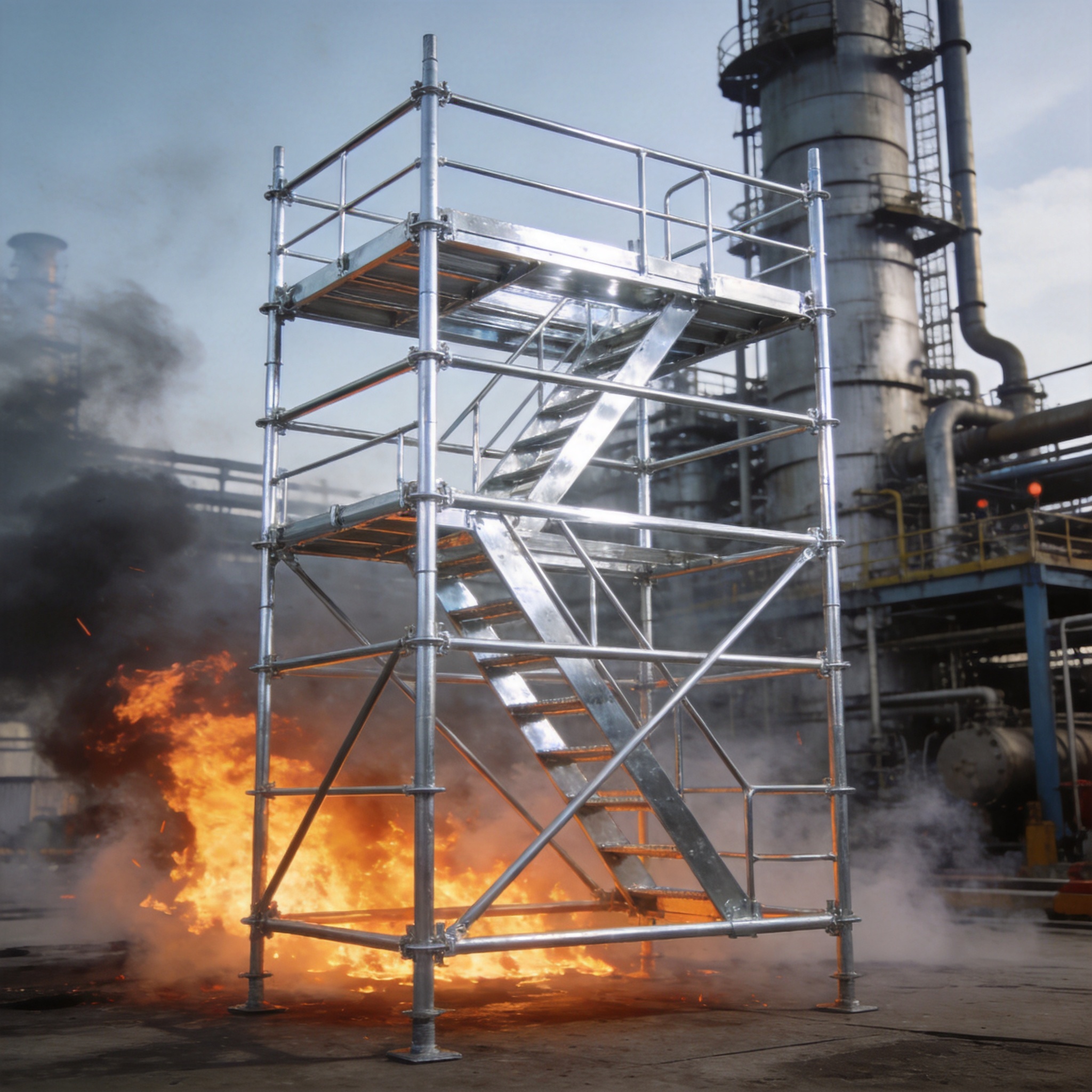


For over two decades, EN 1004 served as the definitive standard for mobile access and working towers. However, the publication of EN 1004-1:2020 marked a significant shift in how these structures are classified, tested, and documented. If you are a contractor, safety manager, or equipment specifier, understanding these changes is not just about compliance¡ªit is about ensuring site safety and operational efficiency.
In this guide, I will break down the major differences between the old EN 1004 and the new EN 1004-1:2020. Drawing on my 16 years of experience in the scaffolding industry, I will explain the technical shifts in practical terms, covering everything from classification systems to the new Class A and Class B distinction.
The Timeline: Why the Change Happened
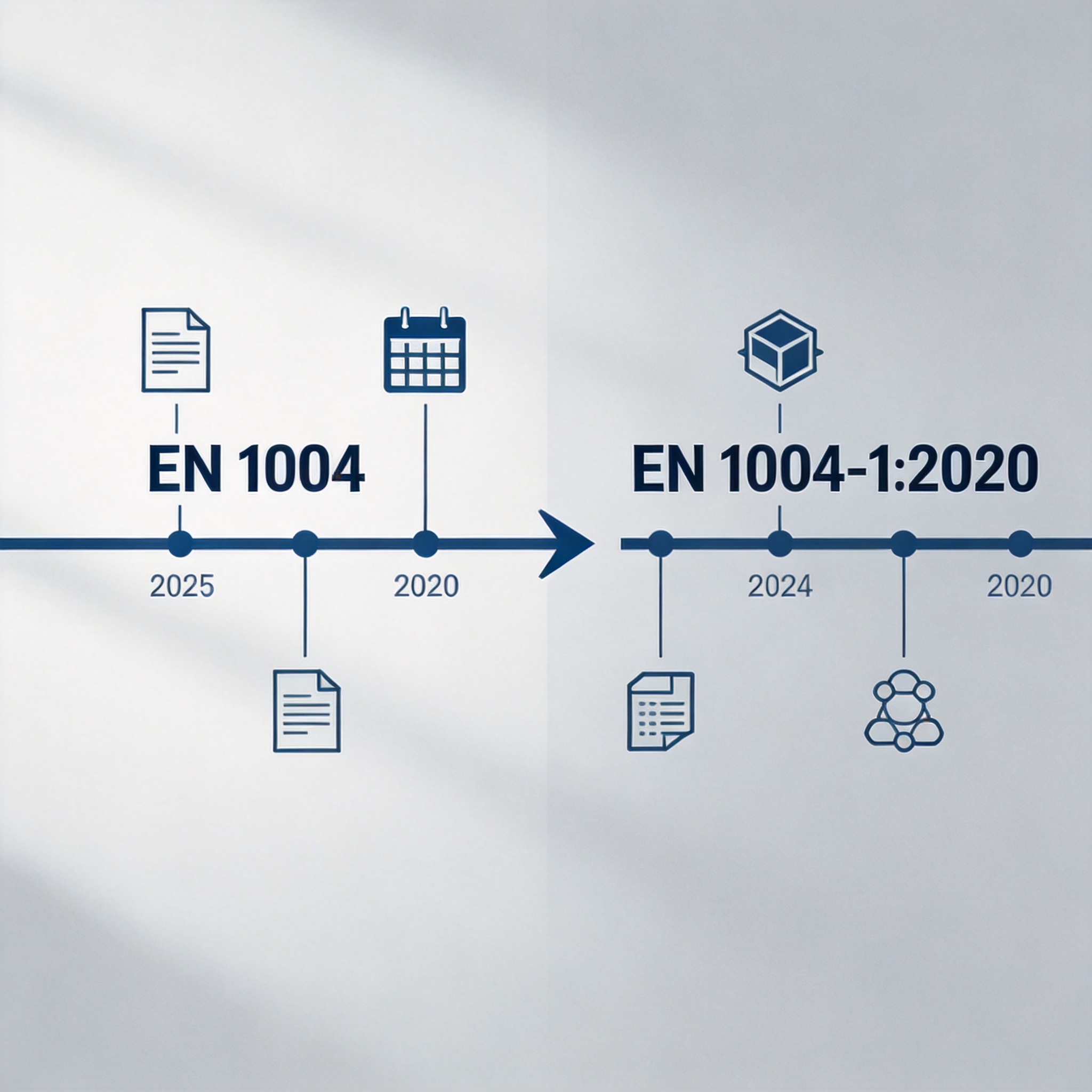
The transition to EN 1004-1:2020 was not an arbitrary update. It was part of a broader European initiative to align standards with the Machinery Directive 2006/42/EC. The previous version, EN 1004:2004, focused primarily on dimensional requirements and stability for towers up to a certain height, but it left room for interpretation in structural design.
In my work with European contractors, I have seen how the old standard allowed for “deemed to satisfy” rules that often bypassed rigorous structural verification. The new standard eliminates many of these shortcuts. It introduces a clear classification system based on the maximum working load, not just the platform height, which fundamentally changes how engineers calculate stability.
Furthermore, EN 1004-1:2020 is now harmonized under the Construction Products Regulation (CPR). This means that any tower manufactured after the withdrawal date (which was June 2022 for the old standard) must carry a Declaration of Performance (DoP) and CE marking based on the new criteria. This is a legal requirement, not just a technical suggestion.
Classification Shift: From Height to Load Class

The most significant change in EN 1004-1:2020 vs. previous EN 1004 is the classification system. Under the old standard, towers were generally categorized by their platform height¡ªtypically up to 8 meters for indoor use and 2 meters for outdoor use without additional anchoring. This often led to confusion on site when wind loads or material weights were not properly considered.
The new standard replaces this with a performance-based classification: Class A and Class B. Class A towers are designed for light-duty use, with a maximum distributed load of 2.0 kN/m2, while Class B towers are for heavy-duty use, supporting up to 3.0 kN/m2. This distinction aligns with the load classes defined in EN 12811-1, creating consistency across temporary works equipment.
Here is a quick breakdown of the major classification differences:
- Class A: Maximum platform load of 2.0 kN/m2, typically used for inspection and light maintenance tasks.
- Class B: Maximum platform load of 3.0 kN/m2, suitable for bricklaying, plastering, and heavy tool storage.
- Height Limitations: Height is no longer the primary classifier; instead, stability calculations dictate the maximum safe height for each tower configuration.
- Wind Load: The new standard requires explicit calculation of wind load effects, whereas the old standard had simplified prescriptive rules.
From my test records, I have observed that many “Class A” towers under the new standard are actually sturdier than their predecessors rated at the same height. This is because the structural frames must now undergo rigorous testing to prove they can handle the load without excessive deflection, which was not always the case before. For instance, a 4M mobile aluminium scaffolding tower built to the new standard will have verified load data, unlike older models that relied on generic assumptions.
Structural Requirements and Testing Changes

When comparing EN 1004-1:2020 vs. previous EN 1004, the changes to structural testing are perhaps the most technically complex. The old standard relied heavily on empirical formulas and a bracing system that was considered “adequate” if it followed a specific pattern. The new standard demands verification through calculation or testing to EN 12811-1.
One of the critical updates is the requirement for stability testing with a horizontal force applied at the platform level. In the previous standard, stability was often assumed if the base dimensions met a specific ratio to height. Now, manufacturers must provide test data proving that the tower does not overturn when subjected to a horizontal load equal to 1% of the vertical load, a change that significantly impacts the design of outriggers and stabilizers. This is particularly relevant for multi-use scaffold outriggers with wheels, which must now be tested to ensure they provide adequate stability under the new criteria.
Additionally, the new standard addresses the issue of platform components more strictly. Trapdoor platforms and hinged platforms must now undergo specific load tests to ensure they do not fail under eccentric loading. I have seen instances where older trapdoor platforms flexed dangerously under a concentrated load of 1.5 kN; under the new testing regime, these components must remain rigid to pass certification. This is why choosing a high-quality aluminum plank for scaffolding is critical, as the material and construction directly affect compliance with the new deflection limits.
Another major structural change is the introduction of requirements for vertical loads on guardrails. The new standard requires guardrails to withstand a point load of 300 N applied in any direction. This is a direct response to accident reports where workers leaned against guardrails that buckled. The manufacturing tolerances have also been tightened, with a maximum deviation of ¡À1mm on critical connection points.
Documentation, Marking, and Instructions
The administrative burden has increased under EN 1004-1:2020, but for good reason. The new standard requires manufacturers to provide comprehensive instruction manuals that include not just assembly steps, but also detailed information on the classification, maximum load, and configuration limits. In the past, I often found that instruction manuals were generic and did not match the specific tower model on site.
Every component must now be permanently marked with the manufacturer’s name, the product type, and the production date. This traceability requirement is a game-changer for rental companies. It allows for easier identification of old versus new components, which is critical because mixing components from different standards can create dangerous configurations that do not meet the new stability criteria.
The Declaration of Performance (DoP) is another key addition. This document must be available upon request and should list the essential characteristics of the tower, including its reaction to fire and load-bearing capacity. For safety managers, this document is now the primary reference for verifying that the equipment on site is fit for purpose, rather than relying on a generic CE sticker.
Furthermore, the new standard specifies that the marking must be legible for the lifetime of the product. This means using embossed or stamped markings rather than adhesive labels, which often fade or peel off in harsh weather conditions. This is a practical improvement that I have advocated for years, as unmarked components are a major hazard in the rental market.
Practical Implications for the Industry
For companies managing mixed fleets, the transition period has been challenging. The withdrawal of the old EN 1004 in June 2022 means that used equipment manufactured before that date is still legal to use, but it cannot be re-sold as new. In my consultancy work, I advise clients to clearly segregate their inventory to prevent accidental mixing of old and new frames, as the connection dimensions and bracing locations have changed.
One of the most significant practical changes is the requirement for wind speed assessment. Under the old standard, towers over 8 meters outdoors required tie-ins. The new standard requires a site-specific wind assessment for all towers, regardless of height, if they are to be used outdoors. This shifts responsibility onto the user to check weather forecasts and secure the tower accordingly, a process that is now explicitly documented in the user manual. For those using a heavy duty galvanized steel scaffold tower, this means ensuring the base and anchoring systems are rated for the specific wind conditions at your site.
Here are the key action points for equipment owners and users:
- Audit your inventory: Identify all components and ensure they meet the new marking requirements under EN 1004-1:2020.
- Update training: Ensure your erection crews are trained on the new Class A and Class B distinctions, as the assembly sequence may differ.
- Review documentation: Obtain the new DoP from your manufacturer or supplier for all new equipment purchases.
- Check compatibility: Never mix components from the old EN 1004 with the new EN 1004-1 without written confirmation from the manufacturer that they are compatible.
Ultimately, EN 1004-1:2020 is a more robust standard that closes several safety loopholes present in the previous version. While the transition requires effort, the result is a safer working environment and clearer legal compliance for all stakeholders. For further reading on the technical specifics, I recommend reviewing the official guidance from the UK Health and Safety Executive (HSE) and the European Committee for Standardization (CEN).
