




Table of Contents
Introduction: The Formwork Decision
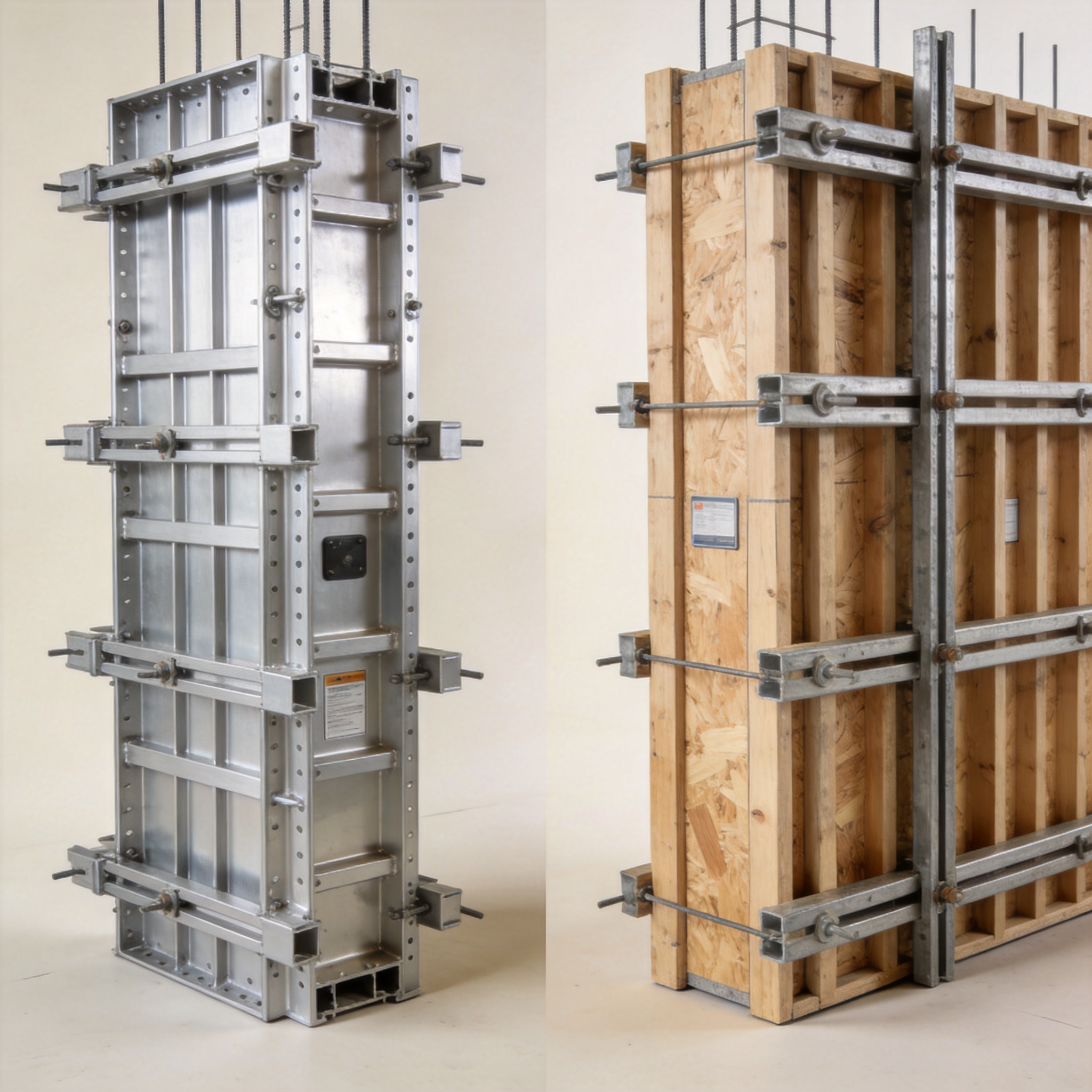
Choosing the right formwork system is one of the most critical decisions in concrete construction. It directly impacts your project timeline, labor budget, and the final quality of the concrete surface. For over 16 years, I have worked as a scaffolding and formwork specialist, observing firsthand how this single choice can make or break a project’s profitability.
In this guide, we will compare aluminum formwork vs. traditional wood formwork using real project data, not marketing hype. We will break down the numbers on cycle times, labor costs, and total cost of ownership to help you make an informed decision for your specific construction needs.
Construction Efficiency: Time and Labor

Efficiency in formwork is measured by the speed of assembly and the number of reuses. In my experience managing high-rise residential projects, the choice between these two materials often changes the construction schedule by weeks. Let’s look at the specific data points that define this efficiency gap.
Cycle Time and Reusability
The most significant difference lies in the number of reuses and the stripping time. Traditional wood formwork, typically plywood, can be reused around 5 to 10 times before the edges fray and the surface degrades. In contrast, aluminum formwork systems are engineered for high-durability, often exceeding 200 to 300 reuses without losing structural integrity.
This durability translates directly into faster cycle times. On a recent 20-story residential project, our team achieved a 4-day floor cycle with aluminum, compared to a 7-day cycle with wood on a similar building. This is because aluminum panels are lighter (typically 20-25 kg per square meter) and feature a simpler pin-and-wedge locking system, reducing the time needed for assembly and dismantling.
Labor Requirements
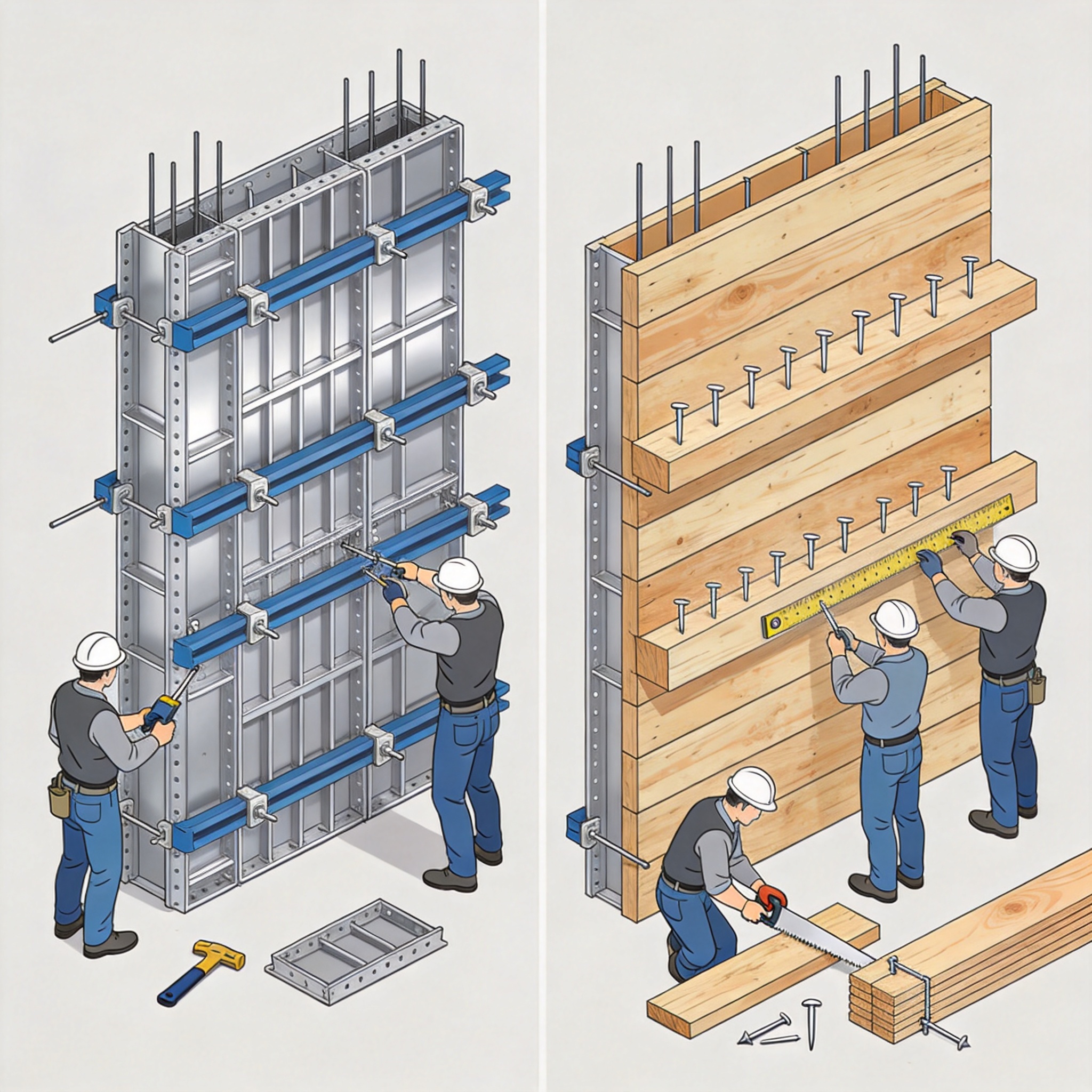
Labor costs are often the largest variable in a construction budget. With wood formwork, you generally need skilled carpenters to cut, measure, and assemble the material on-site. This process is labor-intensive and prone to human error.
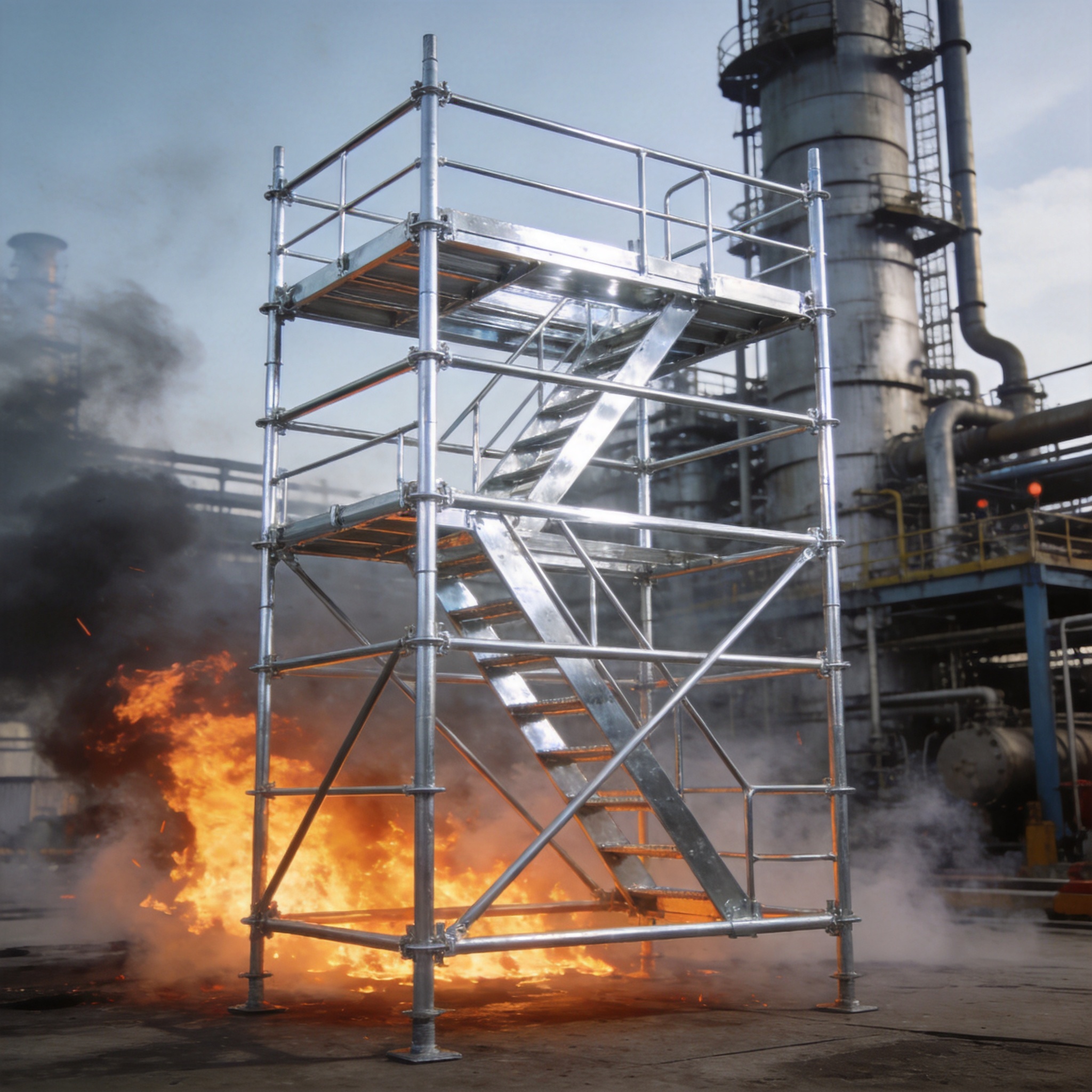
With aluminum, the system is pre-engineered and modular. A crew of semi-skilled laborers can be trained to install the panels in a matter of days. In our field tests, we found that an aluminum system requires roughly 30% less labor to install than a comparable wood system. For a project with 10,000 square meters of formwork area, this saved us approximately 1,500 labor hours over the duration of the build. To support this efficient workflow, having the right access equipment is crucial; a reliable mobile aluminium scaffolding tower can provide workers with quick, safe access to elevated formwork sections, further reducing downtime.
- Wood Formwork: Requires skilled carpenters, high on-site cutting, and material waste.
- Aluminum Formwork: Modular system, minimal cutting, and lower skill threshold for installation.
- Time Savings: Aluminum typically reduces the overall construction schedule by 20-30%.
Cost Analysis: Upfront vs. Long-Term
The initial purchase price of formwork is often the deciding factor for many contractors, but this is a costly mistake. While aluminum has a significantly higher upfront cost, its long-term economics are superior for repetitive projects. We need to analyze the total cost of ownership (TCO) rather than just the sticker price.
Initial Investment and Material Costs
The initial cost of aluminum formwork is roughly 3 to 5 times higher than wood. For example, a basic wood formwork system might cost $15-$20 per square meter of contact area, while an aluminum system will cost $60-$80 per square meter. However, the wood system is a consumable; you will need to replace it after 5-10 uses.
If you are building a single villa, wood is the obvious choice. But if you are building multiple towers with the same floor plan, the math changes drastically. The cost per use for aluminum drops significantly with each reuse, making it the most cost-effective option for projects with more than 30 floors or repetitive layouts. This is similar to investing in durable equipment like a heavy-duty galvanized steel scaffold tower, where the upfront cost is justified by longevity and repeated use across multiple phases of work.
Hidden Costs and Savings
There are several hidden costs associated with wood formwork that are often overlooked. These include the cost of disposing of damaged plywood, the cost of patching concrete surfaces (due to poor panel alignment), and the cost of delays caused by material failure. Aluminum systems require minimal maintenance and produce a smooth, finished concrete surface that eliminates the need for plastering.
To illustrate this, let’s look at a comparative data table from a project we audited in 2023:
| Metric (per m2 of contact area) | Aluminum Formwork | Wood Formwork |
|---|---|---|
| Average Reuses | 200+ | 8 |
| Initial Material Cost | $70 | $18 |
| Cost per Use (Material) | $0.35 | $2.25 |
| Labor Cost per Use | $4.50 | $6.00 |
| Plastering Cost (Required) | $0.00 (Not needed) | $3.00 (Often required) |
- Short-term projects: Wood is cheaper if the formwork will be used less than 10 times.
- Long-term projects: Aluminum becomes cheaper after approximately 15-20 reuses.
- Maintenance: Wood requires constant cleaning and oiling; aluminum requires only basic cleaning.
Quality and Safety: A Technical Comparison
Beyond cost, the structural quality and safety of the formwork system are paramount. Poor formwork leads to concrete defects, which compromise the structural integrity of the building. In my 16 years of experience, I have seen how the rigidity of the formwork material dictates the final outcome.
Surface Finish and Tolerances
Aluminum formwork is extruded with high precision, ensuring that panels fit together tightly. This results in a concrete surface that is flat, smooth, and free of voids. The American Concrete Institute (ACI) standards often cite that aluminum systems achieve a “Class A” surface finish, suitable for direct painting. Wood, on the other hand, often warps and deforms after a few uses, leading to wavy surfaces and the need for extensive patching.
The rigidity of aluminum also ensures that the concrete structure maintains its exact dimensions. Wood is flexible; under the high hydrostatic pressure of wet concrete, it can bow, leading to walls that are out of plumb. This can cause significant issues when installing prefabricated components later in the project.
On-Site Safety
Safety is a non-negotiable aspect of formwork design. Wood formwork is often assembled piece-by-piece, creating a less stable working platform. Aluminum systems are designed with integrated walkways and guardrail points, offering a safer environment for workers. For additional safety on site, using a professional aluminum scaffolding work platform can provide a stable and secure base for crews working at height during the formwork installation process.
Furthermore, the fire resistance of aluminum is superior to wood. Wood is combustible and poses a significant fire hazard on site, especially when stacked in large quantities. Aluminum does not burn, reducing the risk of fire-related accidents. We always prioritize aluminum for high-rise projects to mitigate these risks, even if the initial budget is tighter.
- Finish: Aluminum provides a smooth finish ready for paint; wood requires plastering.
- Precision: Aluminum maintains tolerance of +/- 1mm; wood can vary by +/- 5mm.
- Fire Safety: Aluminum is non-combustible; wood is a fire hazard.
How to Choose the Right System
There is no single “best” formwork system; there is only the best system for your specific project parameters. The decision should be based on a quantitative analysis of your project’s scale, repetition, and timeline. As a rule of thumb, I advise clients to look at the total floor count and the repetition of floor plans.
If your project has a standard floor plan repeated more than 20 times, aluminum is almost always the winner. The initial investment is offset by the rapid cycle times and the elimination of plastering costs. However, if you are working on a unique, one-off structure like a custom museum or a complex bridge pier, traditional wood or steel formwork might be more adaptable. In such cases, a versatile modular multi-function scaffold system can be adapted to the unique geometry of the project, offering the flexibility that rigid aluminum panels cannot.
Here is a simple checklist to guide your decision:
- Calculate the total number of reuses required for the formwork.
- Compare the “cost per use” (Material Cost / Reuses + Labor Cost).
- Factor in the cost of finishing (plastering) for wood systems.
- Assess your labor pool: Do you have skilled carpenters or semi-skilled assemblers?
- Evaluate the project schedule: Is speed a critical factor in your contract?
For further reading on structural design and safety standards, I recommend consulting the guidelines provided by the Occupational Safety and Health Administration (OSHA) for construction safety, and the technical documents from the American Concrete Institute (ACI). These authorities provide the foundational standards that govern formwork design and safety protocols.
