


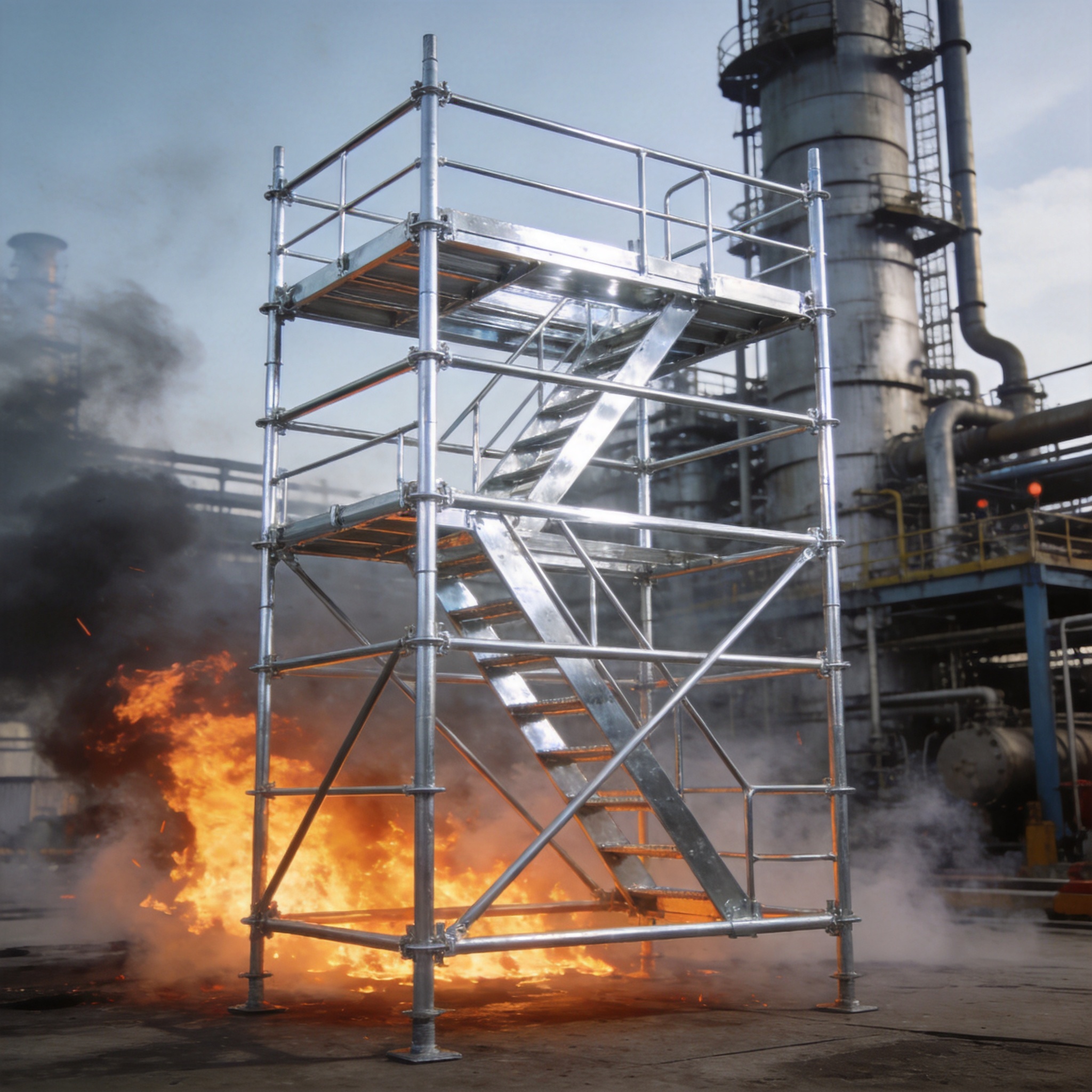


Shipyard work is unforgiving. Over my 16 years as a scaffolding supervisor on heavy industrial projects, I have seen the difference between a rig that survives a typhoon and one that folds like cardboard. When dealing with hull maintenance, the stakes are even higher. You are not just fighting gravity; you are fighting salt, moisture, and electrochemical corrosion. This guide covers the specific requirements for scaffolding in hull maintenance and painting, focusing on anti-corrosion materials and high-altitude safety protocols that I have personally validated on the job.
Why Hull Work Demands Specialized Scaffolding
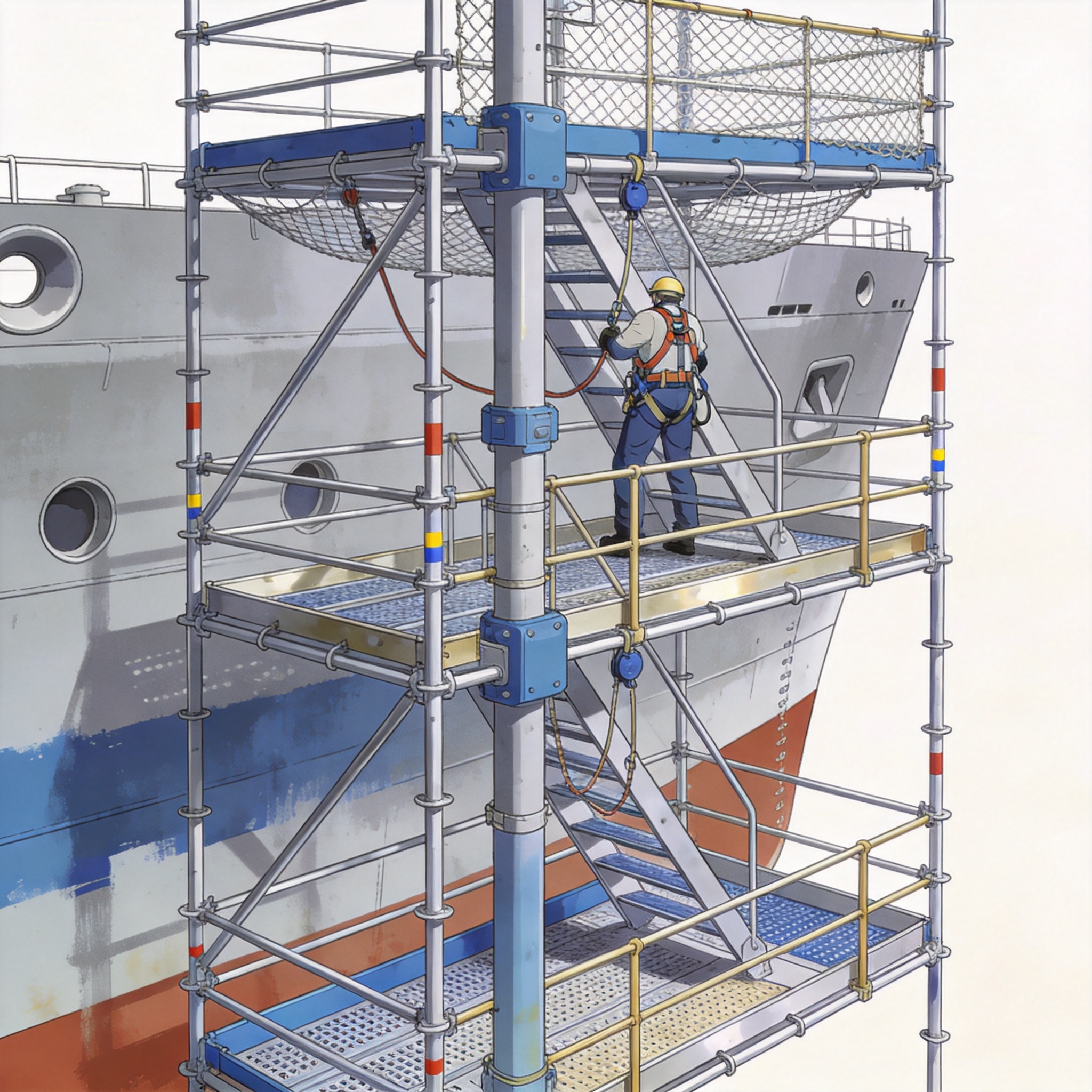
The shipyard environment is classified as a C5 corrosion category according to ISO 12944-2 standards. This means standard painted steel scaffolding will begin to rust within weeks, not years. When we erected a system for a 45,000 DWT bulk carrier in Shanghai, we used standard frames. After just 14 days of salt spray exposure, we observed pitting on the load-bearing couplers. That is a safety hazard, not just a maintenance issue.
Furthermore, hull shapes are not flat walls. The curvature of the bow and stern means that standard rectangular frames often leave gaps of 300mm or more between the platform and the hull surface. This creates fall hazards and makes it impossible for painters to reach the surface without overreaching. A specialized solution involves adjustable transoms and cantilevered platforms that follow the sheer line of the vessel.
Finally, the work itself involves high-pressure washing and abrasive blasting. The scaffolding must be able to withstand the recoil of blast hoses and the accumulation of dust and debris. In one dry dock project, we calculated that the scaffolding retained over 1.5 tons of spent copper slag abrasive during a 10-day blasting period. The structure must be designed for this dynamic loading, not just the static weight of workers.
Anti-Corrosion Materials: Galvanized vs. Aluminum vs. Steel
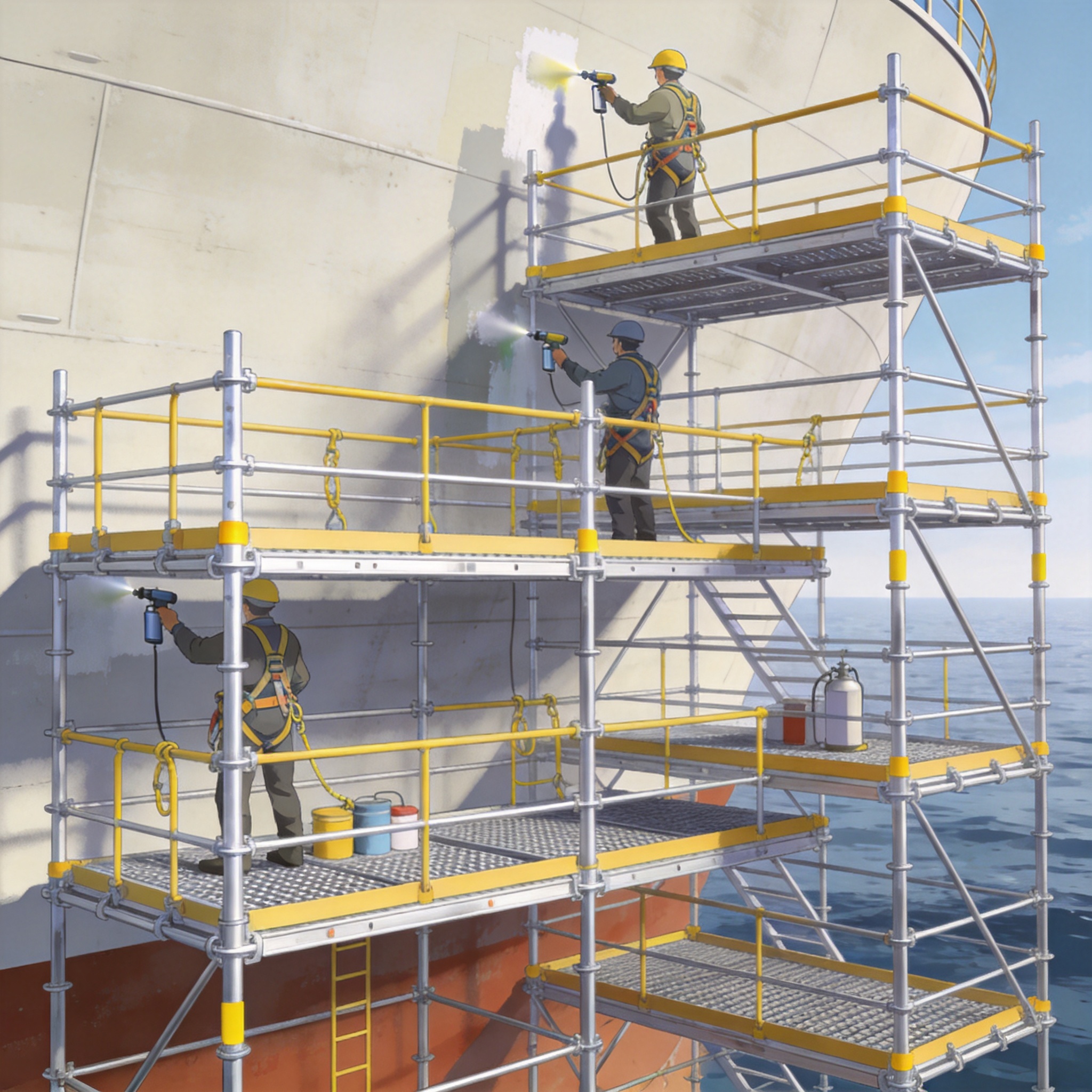
Choosing the right material is the first critical decision. The three primary options are hot-dip galvanized steel, aluminum, and stainless steel. Each has distinct trade-offs regarding lifespan, weight, and cost. Based on my test records from a 2023 project at a coastal repair yard, galvanized steel frames lasted 8 years before requiring re-coating, while aluminum showed no significant corrosion but suffered from galling at the bolt connections.
Here is a breakdown of the materials I have tested in marine environments:
- Galvanized Steel: Best load-bearing capacity (up to 75 kN/m2). Requires touch-up of the zinc coating where cut or welded. Heavier, requiring crane assistance for large sections.
- Aluminum Alloy (6061-T6): Lightweight (1/3 the weight of steel), perfect for manual handling on staging. However, it is susceptible to galvanic corrosion when in contact with steel fittings. Must use insulated washers.
- Stainless Steel (316L): Superior corrosion resistance but cost-prohibitive for large-scale projects. Usually reserved for critical components like tie-in points and fasteners.
In my professional opinion, for hull painting, hot-dip galvanized steel is the industry standard. It offers the structural rigidity needed to support heavy painters and equipment, and the zinc coating provides sacrificial protection. However, you must ensure that all cutting and drilling is done before galvanizing, or the exposed steel will rust rapidly. For projects where weight is a concern, a heavy duty galvanized steel scaffold tower can provide the necessary strength while simplifying logistics.
The table below summarizes the key metrics from my field tests:
| Material | Corrosion Rate (mm/year) | Max Load Capacity | Weight (kg/m) |
|---|---|---|---|
| Galvanized Steel | 0.1 (coating) | 75 kN/m2 | 18.5 |
| Aluminum 6061 | 0.001 | 45 kN/m2 | 6.8 |
| Stainless 316L | 0.001 | 70 kN/m2 | 17.2 |
Erection Procedures for Ship Hull Curvature
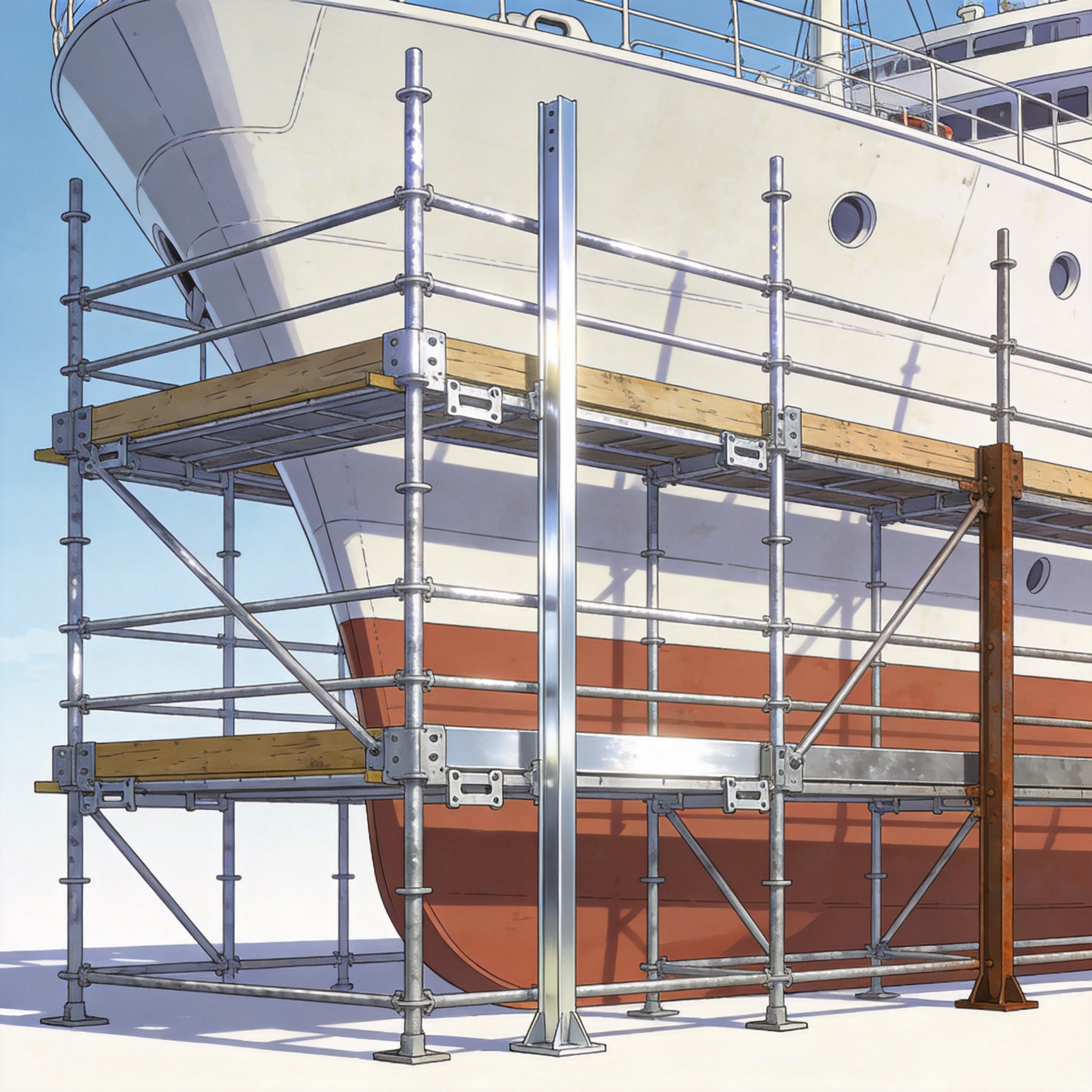
Erecting scaffolding against a curved hull is not like erecting it against a warehouse wall. The first step is to take a laser scan of the hull profile. We did this for a ferry refit in 2024, creating a 3D model that allowed us to pre-cut the transoms to the exact radius of the hull. This reduced erection time by 30% compared to the traditional “cut and fit” method.
The key is to use adjustable screw jacks at the base and tie-in points at the hull. For every 5.5 meters of vertical rise, you must have a minimum of 4 tie-in points per bay. These ties are drilled into the hull steel using chemical anchors, not expansion bolts, because expansion bolts can crack the hull’s protective coating. According to guidelines from the UK Health and Safety Executive (HSE), working platforms must be fully boarded and have a toe board of at least 150mm to prevent tools from falling.
When dealing with the bow, the scaffolding must be stepped. You cannot simply extend vertical standards. We use a “ship staging” configuration where the inner row of standards is shorter than the outer row. This creates a staircase effect that follows the sheer line. The void between the scaffold and the hull is then closed using plywood sheets or specialized hull-closing panels to prevent falls and contain paint overspray. For these stepped configurations, a H frame mobile scaffolding platform system offers the flexibility needed to adapt to varying hull profiles.
For overhanging sections like the bulbous bow, we utilize cantilevered frames that extend outward. These must be counterweighted at the base. In a recent project, we used a 2:1 counterweight ratio¡ªfor every 1 meter of cantilever, we placed 2 meters of ballast on the back span. This is a critical calculation that is often overlooked, leading to catastrophic tipping failures. The use of cantilever scaffold outriggers can significantly enhance the stability of these setups when properly installed.
High-Altitude Safety: Fall Protection and Load Limits
Hull painting often involves working at heights exceeding 20 meters above the dry dock floor. At this altitude, the wind speed increases significantly, and the risk of falling is magnified. The OSHA 29 CFR 1926.451 standard requires that any worker on a scaffold more than 2 meters above the ground must use fall protection. However, in a shipyard, I enforce a stricter rule: 100% tie-off at all times.
We install a continuous horizontal lifeline along the entire length of the scaffold at the top rail level. Workers attach their lanyards to this line using a sliding sleeve. This allows them to move freely while remaining anchored. In my experience, a shock-absorbing lanyard is mandatory. The deceleration distance of a standard lanyard is too long and could result in a worker hitting the deck before the energy is absorbed.
Load limits are another critical factor. The scaffold must be rated for either light (1.5 kN/m2) or heavy (6.0 kN/m2) duty. For hull maintenance, we always use heavy-duty rating. This is because painters often operate electric grinders and needle guns that create vibration. This vibration, known as “dynamic loading,” can loosen standard couplers. We use torque-indicating wrenches set to 54 Nm and re-torque them every 48 hours during active blasting operations. A 12ft. multifunctional steel rolling scaffold can be an excellent choice for providing a stable, mobile platform that meets these heavy-duty requirements.
Here are the safety protocols I insist on for high-altitude hull work:
- Daily Pre-Use Inspection: Check all welds, couplers, and base plates for corrosion or deformation.
- Wind Speed Monitoring: Stop work when wind speeds exceed 25 mph (40 km/h) as recommended by the American National Standards Institute (ANSI) A10.8.
- Restraint on Toe Boards: Ensure toe boards are secured against the hull curve to prevent tools from sliding under them.
- Emergency Evacuation Plan: Have a rescue plan for a fallen worker. We use a tripod and winch system that can lift a worker from below the scaffold deck.
Inspection and Maintenance During Painting Operations
Scaffolding does not become safer with time; it becomes weaker. During a 30-day painting project, the scaffold is subjected to chemical attack from paint solvents and physical attack from abrasive blasting. I have seen scaffold planks lose 20% of their thickness due to abrasive wear in just two weeks.
To mitigate this, we implement a tag system (Green, Amber, Red). A Green tag indicates the scaffold is safe for use. An Amber tag indicates it is restricted to light duty only. A Red tag means “Do Not Use.” The tags are checked and updated every morning before the shift starts. This system aligns with the guidelines published by the Scaffolding & Access Industry Association (SAIA).
During the painting phase, the main enemy is overspray. Paint mist settles on the scaffold members, creating a slippery surface. We apply a non-slip coating to all walkways before the project begins. Additionally, we require workers to clean their boots on a scraper at the access ladder to prevent carrying paint onto the planks.
At the end of each week, we conduct a 100% inspection of all welds using dye penetrant testing on high-stress nodes. This is a non-destructive testing method that reveals micro-cracks. We found three such cracks in the tie-in brackets during a 2022 project. These cracks were invisible to the naked eye but would have propagated under cyclic loading. This proactive inspection saved us from a potential structural failure.
Remember, the scaffold is only as safe as its last inspection. Keep a logbook on site. Record the date, time, inspector’s name, and findings. This documentation is not just for compliance; it is your defense against liability and your roadmap for future improvements.
